Artificial Intelligence in Healthcare: An Interdisciplinary Analysis of Uses and Difficulties
Keywords:
- Artificial Intelligence (AI); Healthcare; Clinical Diagnosis; Personalized Medicine; Medical Imaging; Remote Patient Monitoring; Explainable AI; Digital Health
Abstract
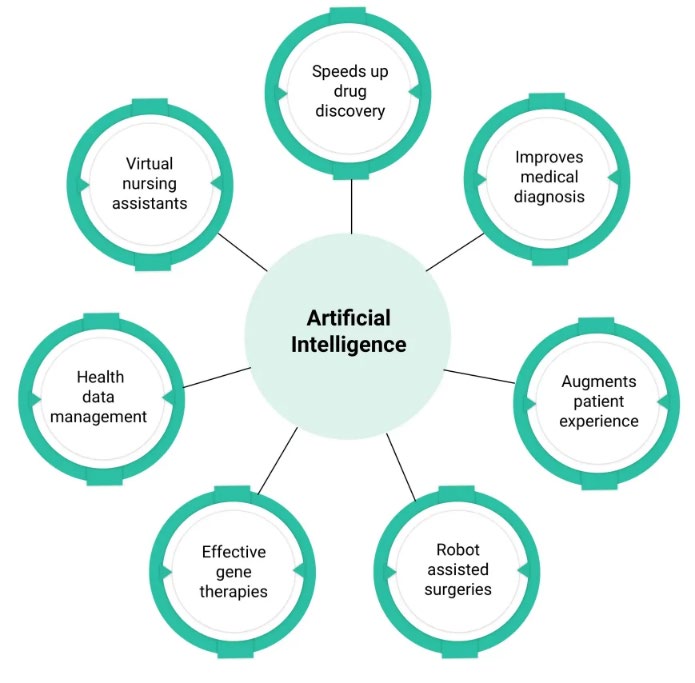
Artificial intelligence (AI) has proven to be a revolutionary technology in healthcare, providing major improvements in disease diagnosis, medical imaging, personalized medicine, drug discovery, healthcare administration, and remote patient monitoring. This review presents a multidisciplinary analysis of major applications, issues, and future opportunities for AI in contemporary healthcare. This study considers the use of AI to improve clinical decision-making, enhance diagnosis, optimize treatment planning, and improve healthcare delivery. In addition, this study provides an analysis of the contribution made by medicine, computer science, data science, biomedical engineering, ethics, law, and public health in implementing AI in the field of healthcare. In conclusion, the review underscores that while AI offers great potential to improve patient health and the efficiency of healthcare delivery, its successful use depends on algorithmic transparency, multidisciplinary cooperation, governance, and ongoing human oversight. Ultimately, new areas of research like explainable AI, federated learning, multimodal data integration, digital twins, and privacy-preserving AI have been suggested as critical aspects in advancing intelligent, ethical, and safe healthcare. In summary, this review underscores the importance of responsible AI use in achieving intelligent, efficient, and sustainable healthcare systems.