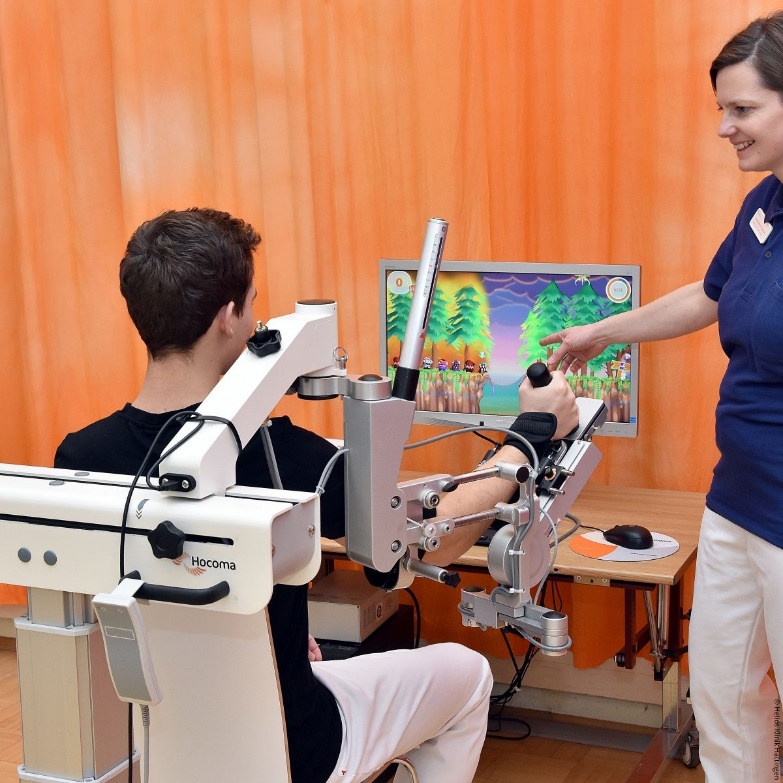
Robotics-Assisted Rehabilitation in Neurological Physiotherapy: A Review
Keywords:
- Robotics-assisted rehabilitation; Neurological physiotherapy; Stroke rehabilitation; Exoskeletons; Artificial intelligence; Virtual reality; Motor recovery.
Abstract
Major causes of long-term impairment include neurological conditions such stroke, spinal cord injury, Parkinson's disease, multiple sclerosis, cerebral palsy, and traumatic brain injury. These conditions frequently result in impaired motor function, balance, gait, and decreased functional independence. Even though traditional neurological physiotherapy is still the mainstay of rehabilitation, therapist workload, treatment intensity, and delivery variability often limit its efficacy. In order to support neuroplasticity and motor recovery, robotics-assisted rehabilitation has become a cutting-edge strategy that offers repetitive, task-specific, and carefully regulated interventions. The principles of robotic rehabilitation, types of rehabilitation robots, mechanisms of action, clinical applications, and the integration of cutting-edge technologies like artificial intelligence, virtual reality, brain-computer interfaces, and telerehabilitation are all highlighted in this review of the literature on robotics-assisted rehabilitation in neurological physiotherapy. According to the reviewed research, robotic-assisted therapy enhances motor function, gait performance, balance, coordination, upper and lower limb function, and activities of daily living in people with neurological diseases when paired with traditional physiotherapy. Widespread clinical application is nevertheless hampered by issues including high prices, restricted accessibility, inadequate therapist training, and a lack of standardised therapy protocols, despite these encouraging results. In order to provide evidence-based rehabilitation guidelines, future research should concentrate on creating customised robotic therapies, increasing home-based rehabilitation, incorporating intelligent technology, and carrying out extensive clinical trials.