Wearable Technologies in Physiotherapy Assessment and Treatment: Current Trends and Future Directions
Keywords:
- Wearable sensors; Physiotherapy; Inertial measurement units; Telerehabilitation; Smart textiles; Exoskeletons; Machine learning
Abstract
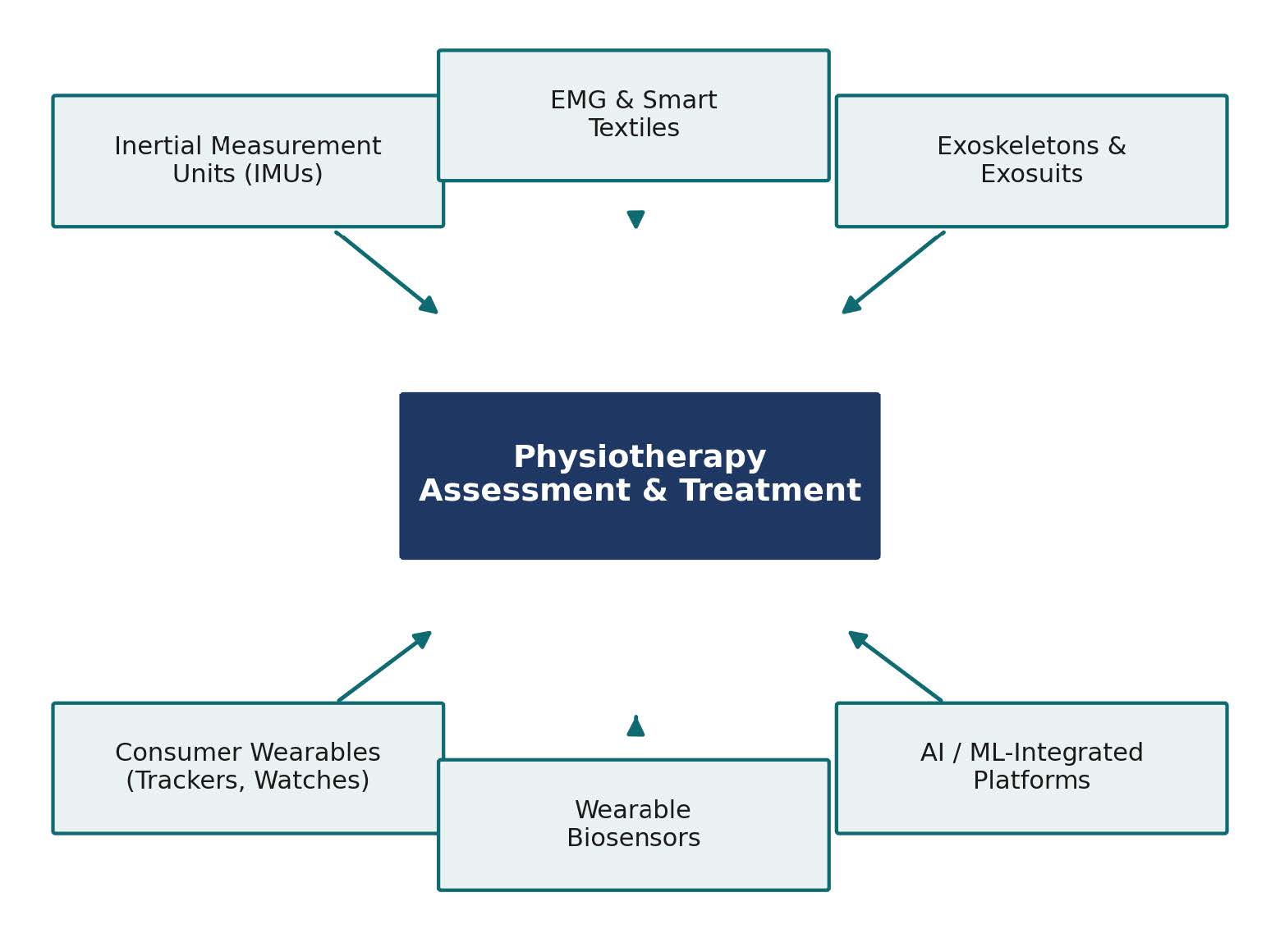
There is a swift transition underway from the clinic-bound and observer dependent measures of physiotherapy assessment and treatment to continuous, sensor-driven, accessible measures of care. This review aims to bring together the latest research on wearable technologies employed in the fields of musculoskeletal, neurological, post-surgical, and cardiopulmonary physiotherapies, such as inertial measurement units (IMUs), surface and textile-based electromyography (EMG), soft and rigid exoskeletons, wearable activity trackers, wearable biosensors, and wearable platforms incorporating artificial intelligence (AI). It explores reliability and validity evidence for these devices, methodology to design and test devices, as well as implementation in the field of telerehabilitation, neurological recovery, and musculoskeletal care pathways. It also identifies key strengths and weaknesses within each category of technology, including measurement accuracy, durability, cost, data governance, and integration into clinical practice, in addition to major gaps in existing literature, such as methodological differences, small, unrepresentative validation samples, and a lack of long-term evidence in real-world practice. To summarise, wearable technologies represent a growing viable, objective, and real-time addition to traditional assessment methods for physiotherapists and their potential further development alongside standardised protocols and clarity of regulations is expected to enhance the future of accessible, data-driven rehabilitation care.